
nuclear weapons
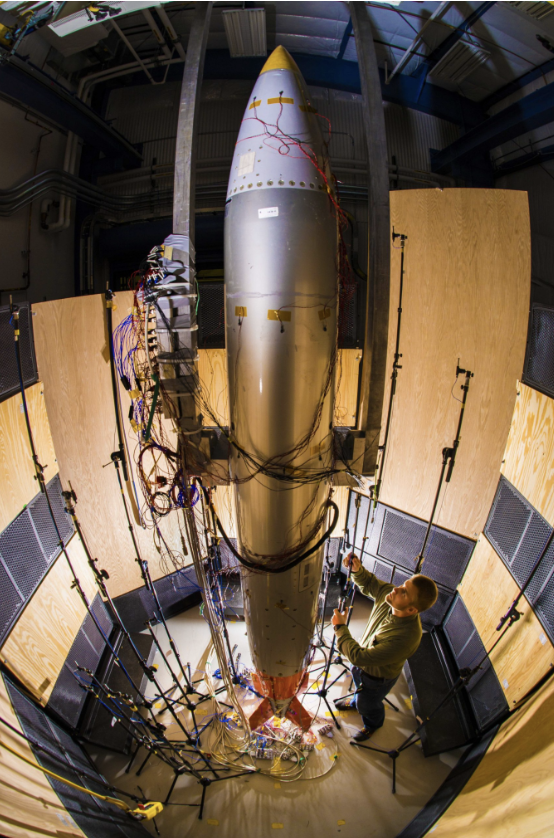
Nuclear Security (nd). The U.S. nuclear weapons stockpile [png]. U.S. Department of Energy. https://www.energy.gov/nnsa/us-nuclear-weapons-stockpile
What are nuclear weapons?
Nuclear weapons are the most powerful explosives on our planet. They use a fission reaction, or the splitting apart of atoms, to create a multiplying chain reaction that releases an enormous amount of nuclear energy in a short period of time. [1] When a nuclear weapon explodes, it gives off four types of energy including: a blast wave, intense light, heat, and radiation. [2]
According to the CDC, ‘the main dangers of a nuclear weapon detonation for persons close to the blast site include injury or death from the blast wave, moderate to severe burns from heat and fires, blindness from the intense light, and radiation sickness — Acute Radiation Syndrome (ARS). The CDC continues, ‘those farther away from the blast site will be victim to nuclear fallout, contaminated water and food sources, and radiation sickness.’ [2]
There is a common denominator of radiation in both near and far situations compared to the blast site, which takes priority in an emergency medical response. We do have medications considered to be radiation countermeasures. Radiation Emergency Medical Management under the U.S. Department of Health and Human Services has created an incredible database, Managing Internal Radiation Contamination, which contains a well-rounded list of radiation countermeasure treatments. [5] We do have a Strategic National Stockpile, which potentially could be improved. When it comes to the distribution of stockpiled medications for radiologic and nuclear events, the question must be asked, how can we deliver medications according to our nuclear threat level ahead of a nuclear weapon detonation to ensure the highest level of survivability for Americans?
Sozo Scientific is prepared to help through communication with the appropriate American powers, we can create a nuclear threat level, and communicate this within the healthcare system. While the national strategic stockpile is absolutely worthwhile, it should be noted that during the Covid-19 Pandemic, hospitals ran out of ventilators provided by the Strategic National Stockpile.
Communicating a nuclear threat level within the healthcare system ahead of a detonation allows facilities to begin purchasing countermeasure medications in addition to the national strategic stockpile to give our healthcare system the greatest opportunity to keep our people alive.
To read more about Sozo Scientific’s concept for a nuclear monitoring system, click here.
Resources
[1] Nuclear Matters Handbook (2020) Basic nuclear physics and weapons effects. Office of the Deputy Assistant Secretary of Defense for Nuclear Matters. https://www.acq.osd.mil/ncbdp/nm/NMHB2020rev/chapters/chapter13.html
[2] CDC (2024) Radiation emergencies: Nuclear weapon. United States Government. https://www.cdc.gov/radiation-emergencies/infographic/nuclear-weapon.html?st_source=ai_mode
[3] CDC (2025) Radiation emergencies: Potassium iodide. United States Government. https://www.cdc.gov/radiation-emergencies/treatment/potassium-iodide.html?st_source=ai_mode#:~:text=Pharmaceutical%20Countermeasures%20for%20Radiation%20Emergencies,need%20to%20continue%20taking%20KI.
[4] Radiation Emergency Medical Management (2026) Prussian blue, insoluble. U.S. Department of Health & Human Services. https://remm.hhs.gov/prussianblue.htm?st_source=ai_mode
[5] Radiation Emergency Medical Management (2026) Managing internal radiation contamination. U.S. Department of Health & Human Services. https://remm.hhs.gov/int_contamination.htm#blockingagents
[6] Radiation Emergency Medical Management (2026) Strategic national stockpile. U.S. Department of Health & Human Services. https://remm.hhs.gov/sns.htm